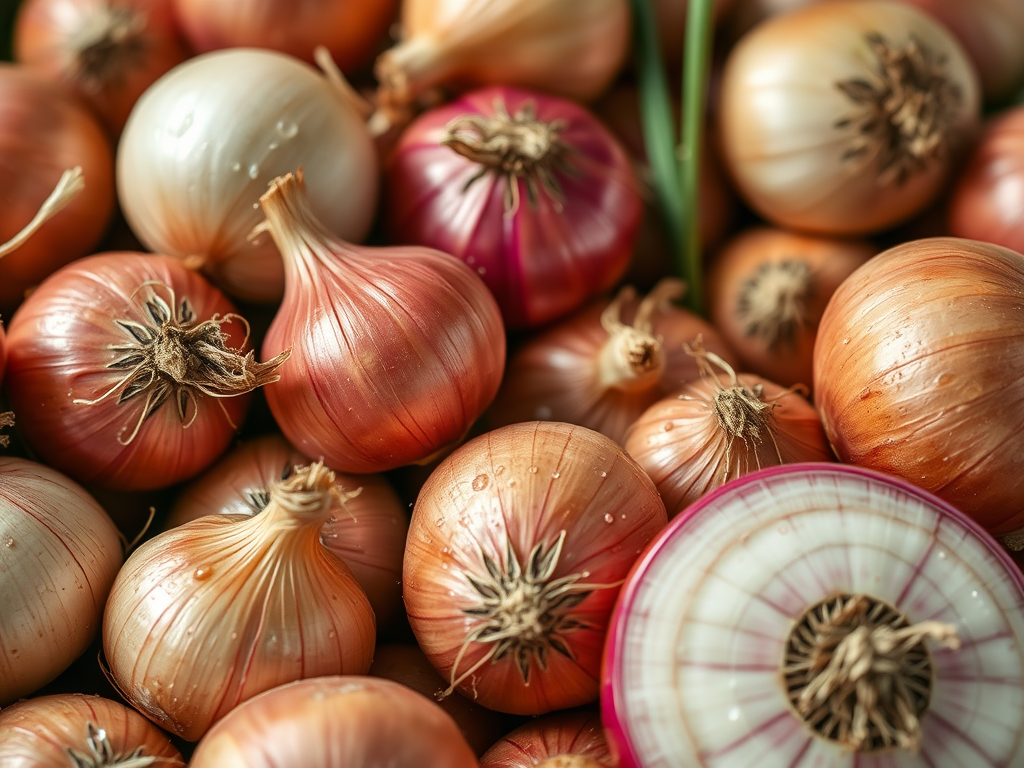

The Migraine Diet (sometimes called the Headache Diet) can feel intimidating when you first start. One of the hardest things for me to give up? Onions.
I don’t know about you, but I used to cook with onions all the time. They went into just about everything. So when I was told to avoid them, I felt lost, sad, and honestly a little confused about how I was supposed to cook without them.
Discovering the Shallot Swap
This is when I discovered one of the best resources out there for Vestibular Migraines: The Dizzy Cook. I bought both of her books, and that’s where I learned about the gift of shallots.
It turns out shallots and green onions can often be substituted for onions. My mind was blown! For years, I thought shallots were just something fancy chefs used for a reduction sauce.
So what makes them different? While onions and shallots look and taste similar, shallots actually belong to the garlic family. They grow in clusters (like garlic) and have a papery skin. The flavor is milder and a little garlicky compared to the stronger bite of onions.
Nutrition Benefits of Shallots


While shallots are usually a little more expensive at the store, they bring some added nutrition perks. According to Healthline, shallots are higher in vitamins and minerals like vitamin C, fiber, B vitamins, and folate. They also contain more protein compared to onions.
So yes, they cost a bit more—but they can be worth it both for flavor and nutrition.
Hidden Onions in Your Pantry
When I first cleaned out my pantry, I was shocked to see how many seasoning blends contained onion powder. Lemon Pepper, for example, was one I never thought to check.
If you’re starting out, I recommend:
Deciding what to do with them: cook them for your family, give them away to neighbors, or donate them to a local food pantry or shelter
- Checking seasoning mixes for onion powder
- Looking at boxed and canned goods for hidden onion ingredients
Eating Out Without Onions
One of the hardest parts of avoiding onions is dining out. Most restaurants use onion in their sauces, seasonings, or marinades.
A few tips that have helped me:
- Choose restaurants that make food to order (Plan ahead!)
- Ask for your food “plain” or “naked” (no seasoning blends)
- Add your own salt and pepper at the table—or carry a migraine-friendly seasoning mix with you
The recipes I will share on this blog will almost always use shallots. If you are not sensitive to onions you may also substitute with onions. I will usually indicate in my recipes what you can replace the shallots with. I hope you find this to be a life saver as I did.
Final Thoughts
In all of my recipes, I almost always use shallots instead of onions. If you are not sensitive to onions, you can swap them back in—but for me, learning this substitution was a life saver.
Cooking without onions felt impossible at first, but discovering shallots gave me my confidence back in the kitchen. I hope it helps you, too.
Leave a Reply